
In Q1 2025, roughly 68% of online shopping orders were completed on smartphones, nearly double what it was four years ago. Except mobile, it bleeds revenue. Cart abandonment rates range between 80 and 90% in many segments, well above desktop numbers.
People are showing up. They're just not buying because most mobile apps feel like cramped websites instead of tools built for mobile purchasing. If you're curious about the process or need help building a mobile e-commerce app that converts, MojoTrek's mobile app development services can help.
For now, here's what you need to know about turning mobile browsers into buyers.
Why Mobile Commerce Is (Still) Hard but Worth It
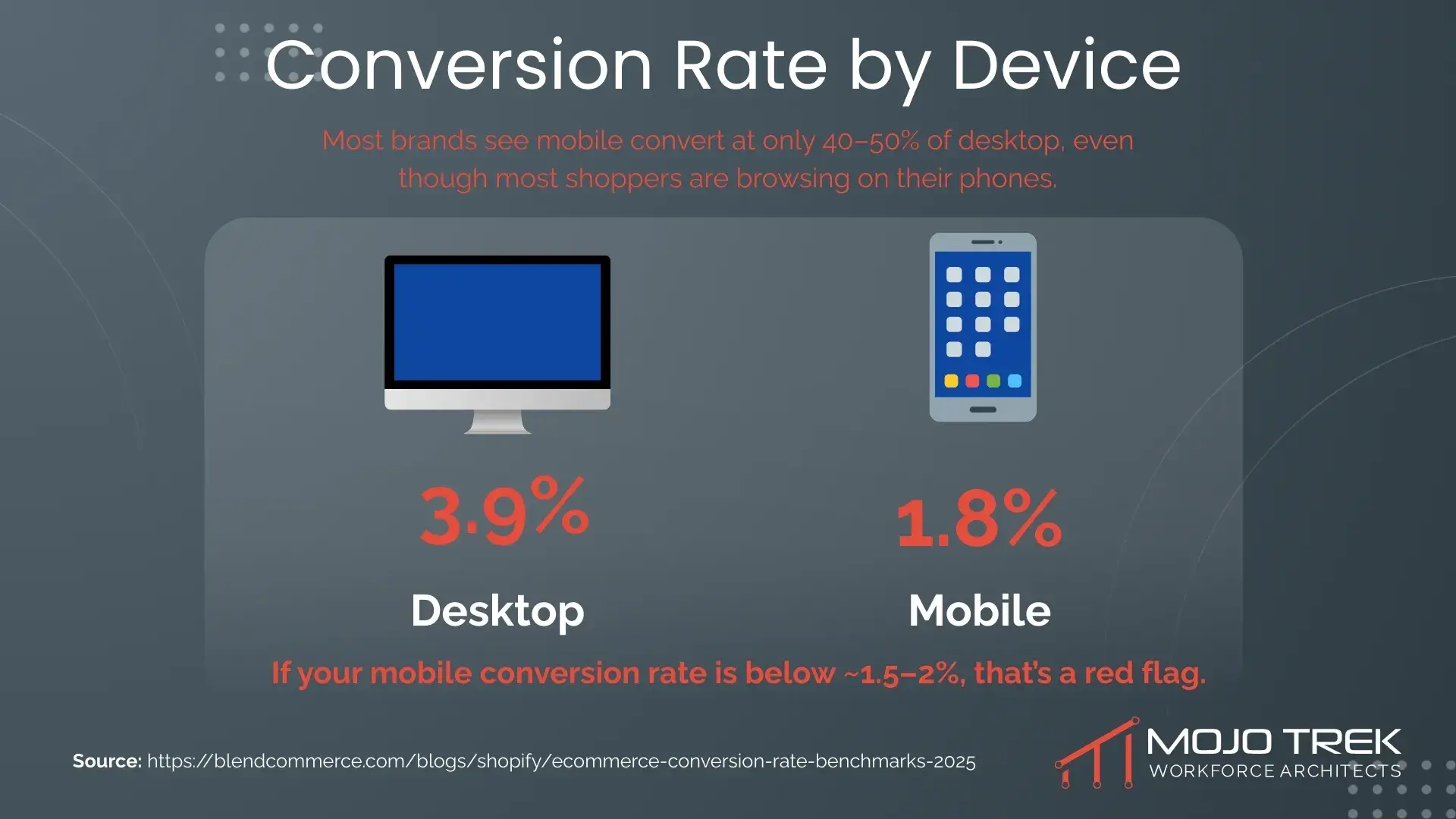
Mobile devices drive the majority of e-commerce traffic, yet they only convert at roughly 1.8% compared to desktops' 3.9%.
Several factors compound to make mobile app checkout harder:
- Screen size limits usability: Smaller screens mean cramped product pages, harder-to-tap buttons, and less room for trust signals (such as reviews and security badges) that drive purchases.
- Checkout is genuinely harder: Typing payment details on a tiny keyboard, switching between apps to check your card number, dealing with autofill that doesn't work properly. Mobile cart abandonment sits between 79-90%, largely because of checkout friction.
- Shoppers browse mobile but buy desktop: Many people research products on their phones during commutes or downtime, then wait to complete the purchase on their laptop at home, where it feels easier and more secure.
- Speed kills conversions: According to Network Solutions, mobile sites that load in 2.4 seconds see conversion rates around 1.9%, but if load time creeps to 5.7 seconds, that drops to 0.6%.
The timeline matters too. Two in three shoppers expect checkout to take under four minutes. Miss that window and you've lost the sale. Remove payment friction, and you stand a better chance of capturing revenue that would otherwise walk away.
Step 1: Define the Core Use Cases of Your eCommerce Mobile App
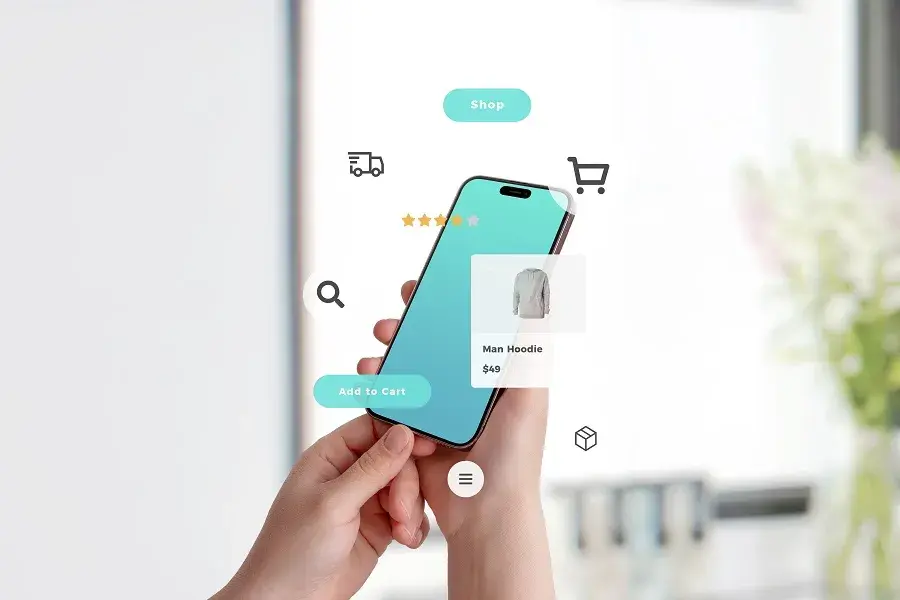
Your e-commerce app development process shouldn't recreate your desktop site. Instead, build a conversion tool focused on the actions that drive sales.
Strive to get these essential features right:
- Product discovery: Fast browsing, intuitive search, and personalized recommendations that help shoppers find what they need.
- Cart and checkout: Crystal-clear total cost, visible shipping speed, and payment options that work in seconds.
- Repeat purchase flows: Account access, one-tap reorders, and subscription management. This is where customer retention lives.
Point three matters more than most brands realize. Beauty, wellness, and repeat-buy verticals often convert at 6-7%+ compared to general retail's ~2% because repeat buyers know exactly what they want. They're not browsing. They're buying. Your online store should make that ridiculously easy.
So, before you hire a software development team to build anything, identify your one or two most profitable "money moments." Are customers reordering vitamins? Buying refills of their favorite skincare? Snagging limited drops as soon as they launch? Design your entire app around making those moments frictionless from the start. Everything else can wait.
Pro tip: Scope for revenue, not vanity features.
Step 2: Build for Performance (Speed = Money)

Slow equals abandoned. Long checkout forms frustrate your customers. 5-second page loads will lose them entirely. The correlation is direct: the more friction you add, the higher your abandonment rate climbs, sometimes as much as 90%!
So, what improves customer loyalty?
- Lightweight UI: Your web store needs to load fast, which means keeping the code lean. Don't load every product image when the app opens. Load them as they scroll.
- Offline-friendly behaviors: If someone loses signal on the subway, they should still be able to browse products or review their cart. Build this into the experience.
- Predictive caching: Load the next screen before users tap it. When a customer adds an item to the cart, start loading checkout in the background. Don't make them wait when they're ready to make a purchase.
- Autofill everything: Saved addresses and payment details should populate automatically. Stripe reports that accelerated checkout methods, such as Apple Pay and Google Pay, make checkout up to three times faster than manual card entry.
Step 3: Design Checkout Like It’s a Product, Not a Form
One mistake app development teams make is to treat checkout as an afterthought when it's a product feature that should at the very least accomplish these things:
- Express pay options are non-negotiable: Apple Pay, Google Pay, Shop Pay, PayPal, and Link are conversion tools. When Stripe tested surfacing Apple Pay early in the checkout process, conversion rates doubled. Also, offer local payment methods. If your customers are in Germany, add Sofort. In the Netherlands, add iDEAL. You get the idea.
- One-tap returning user checkout: Let users save and reuse their credentials. This can lift returning-user conversion by ~14%. Your repeat customers shouldn't have to work as hard as first-time visitors.
- Transparent pricing from the start: Calculate and display the final total early in the checkout process. Springing shipping fees on someone at the last step kills conversions.
- Guest checkout: Don't force people to create an account before they buy. Let them purchase first, then offer account creation afterward.
- Keep it short: Most shoppers expect checkout to take under four minutes. Every extra field or unnecessary step pushes them closer to abandoning.
Turn Mobile Traffic into Revenue
We build high-converting mobile commerce apps: faster checkout, better payments, continuous optimization.
(872) 895-7955 Get a Free ConsultationStep 4: Release Velocity — Ship Improvements Weekly, Not Quarterly
E-commerce apps that drive revenue treat their platforms as a living product. They ship improvements constantly because they know conversion isn't static. Customer behavior shifts. Payment preferences change. New friction points emerge.
2025 data shows that payment preferences directly shape conversion. Teams that can roll out new wallets or local payment methods quickly see measurable lift. But payment options aren't the only place to optimize.
Shopify's funnel benchmarks indicate that ~7.5% of visitors add items to their cart, but only around 2% actually complete the purchase. That means roughly 5.5% of people become interested enough to add something, then drop out before making a purchase. This cart-to-checkout friction is also where continuous testing makes a difference.
To do this well, you need to build an experimentation loop into your e-commerce mobile app development process. Instrument analytics to track where people hesitate or quit: cart drop off, payment selection tap rate, and checkout completion time. These metrics reveal precisely what you need to improve.
Then, use feature flags and remote config to move checkout changes to the server-side. This allows you to test small differences, such as the default payment button order or shipping display format, without waiting for App Store approval. You're not stuck in a two-week review cycle just to swap two buttons. If you only ship new features every quarter, you're leaving conversion gains on the table every single week.
Step 5: Must-Have Features for a 2026-Ready Mobile Commerce App

These features separate apps that convert from apps that frustrate. You don't need all of them on day one, but they should be on your app roadmap:
- Personalized home feed and recommendations: Show users what they're most likely to buy next. This is especially powerful for repeat purchase categories like beauty, which already convert at 6%+ compared to the 2% industry average.
- Persistent cart and cross-device sync: If someone adds an item on mobile and finishes checkout on desktop, their cart and discounts should follow them. This reduces abandonment from people who start shopping in one place and want to complete their purchase elsewhere.
- Push notifications that respect purchase intent: Back-in-stock alerts, price drops, and abandoned cart nudges work when they're relevant. This is high ROI for short-time-to-reorder verticals like consumables and subscriptions - just don't spam!
- In-app wallets and stored payment preferences: Let returning users buy in seconds. One-tap returning user checkout can lift conversion by around 14%.
- Localized and preferred payment methods: Offering relevant local payment options can drive an average 12% revenue lift and 7.4% conversion increase.
- Trust and reassurance in line: Show refund policies, delivery estimates, and support options before payment. Mobile shoppers abandon their purchases when information is missing. Give them confidence upfront.
Where to Invest First (If You Don’t Have Unlimited Budget)

When ecommerce app development cost is a concern, focus your budget on these three areas for the biggest impact:
- Checkout flow and payment UX: This is where conversion happens or dies. Fast wallets, no forced account creation, and transparent pricing move conversion rates immediately. Fix checkout first because it directly affects revenue today.
- Performance and speed: If your app is sluggish on low-end devices or poor networks, you're losing sales before people even reach checkout.
- Release process and iteration speed: Your ability to test, measure, and ship changes weekly is a long-term advantage. Apps that can respond to user behavior quickly compound gains over time. If you're stuck waiting months between updates, you can't react to what the data tells you. Make sure your e-commerce app development company builds the infrastructure to move fast.
Lastly, a pretty feature nobody uses does not matter. A 1% lift in mobile checkout completion is money. Focus on what converts, not what impresses stakeholders in demos, even if they suggest advanced features.